
Hernia Treatment in Howrah: Symptoms, Surgery and Recovery Guide
Table of Contents
What Is a Hernia?
Types of Hernia
Symptoms of Hernia
Causes and Risk Factors
How Hernia Is Diagnosed
Hernia Treatment Options
Laparoscopic vs Open Hernia Surgery
Mesh Repair Explained
Recovery After Hernia Surgery
Complications If a Hernia Is Ignored
Cost of Hernia Treatment in Howrah
When to Go to Emergency
Why Choose Lords Health Care for Hernia Treatment?
Frequently Asked Questions
Book Your General Surgery Visit
Have you noticed a soft bulge in your groin or near your belly button that appears when you stand, cough, or lift something heavy, and goes away when you lie down? That bulge is most likely a hernia, and one of the commonest reasons people in Howrah and Shibpur see a general surgeon. The good news is that hernia treatment in Howrah is a well-established, planned procedure, and most patients are back to normal life within a few weeks.
This guide explains hernia treatment in Howrah in simple words: what a hernia actually is, the different types (inguinal, umbilical, and others), the symptoms to watch for, the warning signs that mean an emergency, how the problem is diagnosed, why surgery is usually the only real cure, how laparoscopic (keyhole) and open surgery compare, what surgical mesh does, how recovery goes week by week, what can happen if a hernia is ignored, and what affect
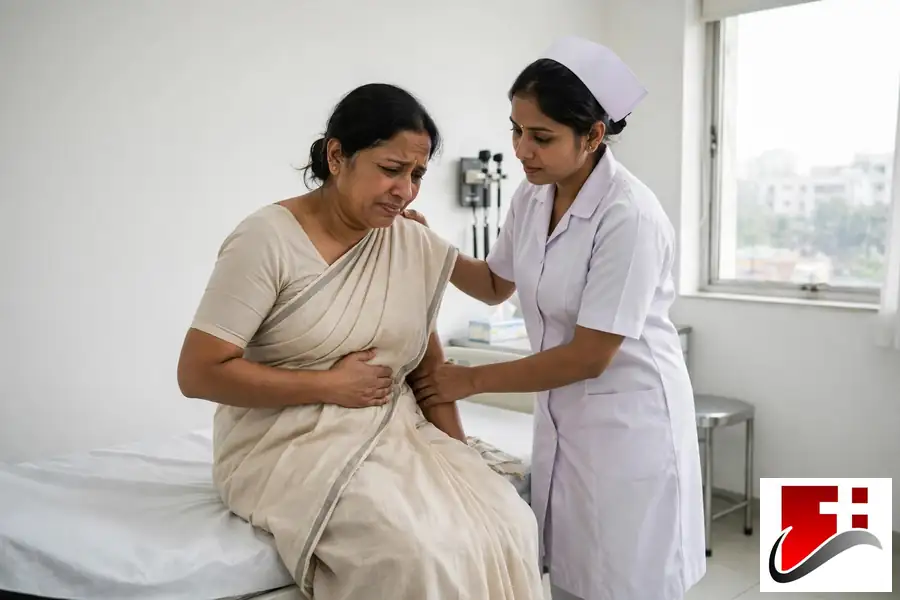
A hernia bulge that appears on standing or coughing should always be checked by a surgeon
What Is a Hernia?
Your abdominal wall is made of layers of muscle and strong tissue that hold your internal organs in place. A hernia happens when part of an organ, usually a loop of intestine or some fatty tissue, pushes through a weak spot in that muscle wall and forms a bulge under the skin. The bulge is often more noticeable when you stand, cough, strain, or lift something heavy, because these actions raise the pressure inside your abdomen. When you lie down, the pressure drops and the bulge often flattens or disappears.
Some weak spots are present from birth. Others develop slowly with age, after previous surgery, or after years of repeated strain on the abdominal wall. Anything that raises pressure inside the abdomen again and again can make a hernia appear or grow: heavy lifting, a long-standing cough, pregnancy, excess weight, or straining because of constipation or difficulty passing urine.
One fact matters more than any other: in adults, a hernia does not heal on its own. Exercise, diet, and hernia belts cannot close the gap in the muscle wall. A belt may make the bulge feel more comfortable for a while, but it does not repair anything, and the hernia usually keeps growing slowly over time. That is why hernia treatment in Howrah almost always means a surgical repair, planned at the right time, before the hernia causes trouble.
Types of Hernia
The location of the hernia decides the symptoms you feel and the operation you need. The main types are:
• Inguinal hernia (groin): The commonest type of all, and far more frequent in men. It causes a bulge in the groin, on one side or both, and in men it may extend down into the scrotum. It often causes a dragging ache that is worse by evening or after a day of standing and lifting.
• Umbilical hernia (belly button): A bulge at or near the navel. In babies, many umbilical hernias close by themselves, but in adults they do not. In adults they are common after pregnancy and in people who carry extra weight around the abdomen.
• Femoral hernia: Also in the groin, slightly lower than an inguinal hernia, and more common in women. It is less common but more likely to become trapped, so prompt repair is usually advised.
• Incisional hernia: A bulge that appears through the scar of a previous operation, sometimes years later. Smoking, obesity, diabetes, and a wound infection after the first surgery all raise the risk.
• Ventral hernia: An umbrella term for hernias in the front of the abdominal wall, including umbilical and incisional hernias and those above the navel (epigastric hernias).
• Hiatal hernia: A different kind altogether, where part of the stomach slides up through the diaphragm into the chest. There is no visible bulge, and it is linked to acid reflux and heartburn rather than a lump. It is managed differently, often with medicines first.
Inguinal and umbilical hernias make up the great majority of cases seen for hernia treatment in Howrah, and both are usually repaired with mesh, by either keyhole or open surgery, as explained below.
Symptoms of Hernia
Some hernias cause no pain at all in the beginning, and people notice them only as a lump. As the hernia grows, symptoms usually follow this pattern:
• A visible or felt bulge in the groin, at the belly button, or near an old surgical scar
• The bulge grows when you cough, strain, stand for long, or lift something heavy, and flattens when you lie down
• An ache or dragging, heavy feeling in the groin or lower abdomen, often worse by evening
• Discomfort or pain when lifting, bending, or coughing
• A burning or gurgling sensation at the site of the bulge
• Swelling in the scrotum in some groin hernias in men
• Nausea, vomiting, or a swollen abdomen, which can mean the hernia has become stuck (see the emergency section below)
Hernia pain is sometimes confused with other abdominal problems. Pain under the right ribs after fatty food, for example, points more towards gallstones than a hernia. Our guide to gallbladder stone treatment in Howrah explains that pattern, and it is worth reading if your pain sits high on the right side rather than in the groin or at the navel.
Causes and Risk Factors
A hernia forms where the abdominal wall is weak and pressure from inside pushes tissue through. The weakness may be present from birth, or it may develop over time. The risk is higher in:
• Men, for inguinal hernia, because of the natural passage in the groin wall
• People who lift heavy weights regularly, at work or in the gym, especially with poor technique
• People with a chronic cough, for example from smoking or long-standing lung disease
• People who strain often because of constipation or an enlarged prostate
• Women during and after pregnancy, when abdominal pressure rises
• People who are overweight, which keeps constant pressure on the abdominal wall
• People who have had previous abdominal surgery, especially if the wound became infected
• Older adults, as muscle tissue naturally weakens with age
• People with diabetes, where healing after surgery can be slower; if this applies to you, our guide to diabetes treatment in Howrah explains how blood sugar is managed before and after an operation
You cannot always prevent a hernia, but you can lower the strain on your abdominal wall: keep a healthy weight, treat constipation and chronic cough, lift with your legs rather than your back, and stop smoking. These habits also help your repair heal well after surgery.
How Hernia Is Diagnosed
Diagnosis is usually straightforward, and a careful diagnosis is the foundation of hernia treatment in Howrah, because the type, size, and position of the hernia decide which operation suits you best.
Talking through your history: The surgeon will ask when you first noticed the bulge, whether it goes back in when you lie down, whether it has ever become painful and stuck, what work you do, and what medicines you take. Bring any earlier scan reports and your list of medicines, including medicines for diabetes, blood pressure, and blood thinners.
Physical examination: Most hernias can be diagnosed by examination alone. The doctor will examine you standing and lying down, and may ask you to cough while feeling the area, because the bulge usually becomes more obvious with a cough. This also helps tell a hernia apart from other groin swellings, such as a lymph node or a fatty lump.
Abdominal ultrasound: If the diagnosis is not certain, or if the surgeon wants to know exactly what is inside the bulge and how wide the gap in the muscle is, an ultrasound scan gives clear answers. It is painless, uses sound waves, and is often done while you stand or strain. Our guide to abdominal ultrasound in Shibpur explains what the test involves and how to prepare for it.
Blood tests and fitness checks: Before any surgery, routine blood tests check your blood count, blood sugar, and kidney and liver function, and an ECG may be done to check the heart. These tests confirm you are fit for anaesthesia. Our guides to routine blood test in Howrah and diagnostic lab in Shibpur explain what these tests cover.
CT scan, only when needed: For very large, recurrent, or complicated hernias, the surgeon may advise a CT scan to map the defect precisely before planning the repair. This is not needed for most straightforward cases.
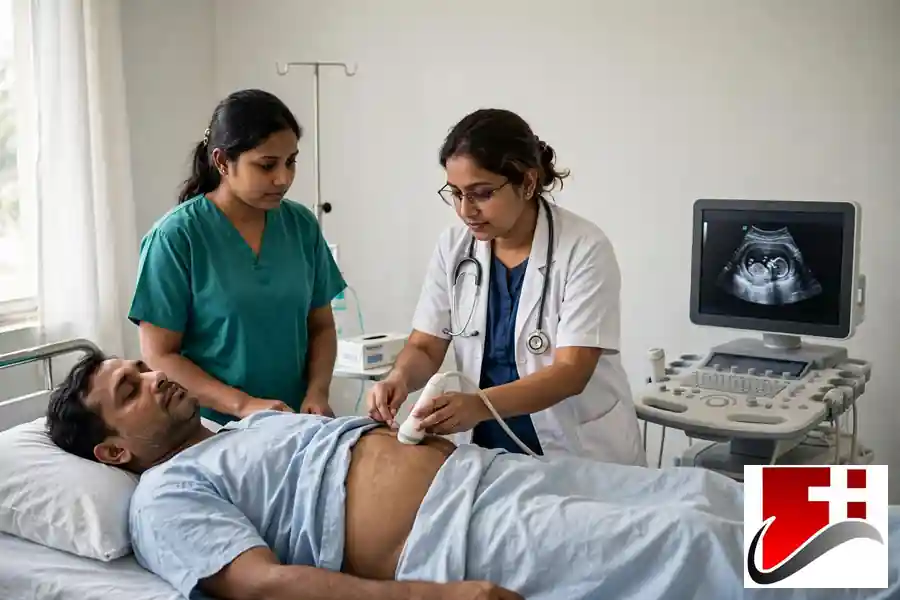
An ultrasound scan confirms the hernia and shows what is inside the bulge
Hernia Treatment Options
Because a hernia cannot heal on its own, the real question is not whether the gap needs repair, but when and how. The options your surgeon will discuss are:
Watchful waiting: For a small, painless inguinal hernia in a man who has no troublesome symptoms, careful watching can be a reasonable choice after a proper discussion with a surgeon. You would be told exactly which warning signs mean you must come back at once, and many people who choose watching later decide on surgery as the hernia slowly grows. Watchful waiting is not usually advised for femoral hernias, for hernias that have ever become stuck, or for umbilical hernias that are enlarging or causing pain.
Hernia belts and trusses: A belt holds the bulge in and may ease discomfort while you wait for surgery, but it does not repair the weak spot and it does not prevent complications. It should never be used as a reason to delay treatment for a painful or growing hernia, and it must never be forced over a bulge that has become hard and painful.
Medicines: There is no medicine that closes a hernia. Pain relievers can ease an ache for a short time, and treating constipation, cough, or prostate problems reduces strain on the abdominal wall, which helps. But these measures support the repair; they do not replace it.
Surgery (hernia repair): This is the only treatment that actually fixes the weak spot. The surgeon pushes the protruding tissue back into place and reinforces the weakened wall, usually with surgical mesh. Planned surgery is simpler, safer, and has a much smoother recovery than emergency surgery done after a complication. The two main approaches, laparoscopic and open, are compared in the next section.
Laparoscopic vs Open Hernia Surgery
Both operations aim at the same result: the hernia contents are returned to the abdomen and the weak spot is reinforced, usually with mesh. They differ in how the surgeon reaches the area, and the right choice depends on your hernia, your health, any previous surgery, and your priorities.
Open hernia surgery is the traditional approach. The surgeon makes a single cut over the hernia, gently pushes the protruding tissue back, and reinforces the muscle wall with mesh. It can be done under local, spinal, or general anaesthesia, which makes it a good option for people who cannot safely have a general anaesthetic. It is often preferred for very large hernias, stuck or strangulated hernias needing emergency surgery, and some recurrent hernias. Recovery is a little slower, with more pain in the first days, and most people avoid strenuous activity for about 4 to 6 weeks.
Laparoscopic (keyhole) hernia surgery uses a small camera and fine instruments passed through three small cuts, usually 5 to 10 mm each. The surgeon sees a magnified view on a screen, returns the hernia contents, and places the mesh behind the muscle from the inside. For groin hernias the two standard techniques are called TEP and TAPP; both place the mesh in the same strong layer behind the muscle. Keyhole surgery needs general anaesthesia. It is especially well suited to hernias on both sides, which can be repaired in one sitting, and to hernias that have come back after a previous open repair. Because the cuts are small, there is usually less pain after surgery, smaller scars, a lower risk of wound infection, and a faster return to work and daily activity.
Neither operation is right for everyone, and a good surgeon will recommend the one that suits your case rather than the one that is simply newer. Recurrence rates are low and comparable with both techniques in experienced hands, because in both cases the repair is reinforced with mesh. Hernia treatment in Howrah at Lords Health Care follows this same principle: the technique is chosen after examining you and reviewing your scans, not before.
Mesh Repair Explained
Many patients ask what mesh actually is, and whether it is safe. Surgical mesh is a sterile, flexible net, usually made of a medical-grade material such as polypropylene. Think of it as a patch on worn fabric: instead of pulling weak edges together under tension, the mesh reinforces the area and your own tissue grows into it over the following weeks, making the repair strong and lasting.
For most adult groin hernias and many umbilical and ventral hernias, mesh lowers the chance of the hernia coming back compared with stitches alone, which is why mesh repair is standard practice around the world. Very small umbilical hernias are sometimes repaired with stitches only. It is reasonable to ask your surgeon which mesh will be used and why.
You may have read alarming headlines about mesh. Most of those concern a different use of mesh in pelvic floor surgery, not hernia repair. Hernia mesh does carry its own uncommon risks, such as infection, long-lasting groin pain in a small minority of patients, and very rarely the mesh sticking to nearby tissue. These risks are low, and your surgeon will explain them honestly before you decide. For the great majority of patients, a mesh repair is a durable, one-time fix.

A surgical consultation explains whether your hernia needs watching or a repair, and which technique suits you
Recovery After Hernia Surgery
Recovery after a planned hernia repair is usually smooth, and knowing the timeline helps you plan work and family duties. These are typical ranges for an uncomplicated repair; open surgery and large ventral repairs usually take a little longer, and everyone heals at their own pace.
Days 1 to 3: Soreness, bruising, and some swelling around the repair are common. After keyhole surgery there may be a mild shoulder-tip ache from the gas used, which passes quickly. Walk short distances from the first day, take pain relievers as prescribed, and support the wound with a pillow when you cough. Many patients go home the same day or the next day, once they can walk, drink, and pass urine comfortably.
Week 1: Pain eases steadily. Light household tasks are fine, and many people with desk jobs return to work late in the first week or in the second week. Keep the dressings clean and dry as instructed, and avoid constipation by drinking enough water and eating fibre-rich food, because straining stresses the repair.
Weeks 2 to 3: Most daily activities feel normal. You can usually drive once you can brake hard without pain and are not drowsy from pain medicines. A follow-up visit is typically arranged around this time so the surgeon can check the wounds.
Weeks 4 to 6: You gradually return to heavier lifting, the gym, and sport as your surgeon advises. Manual work involving heavy lifting often waits until around four to six weeks. After six weeks most people are fully active, though mild numbness or a firm ridge near the scar can last a few months.
Call the hospital if you notice fever, spreading redness or discharge from a wound, pain that gets worse instead of better, inability to pass urine, repeated vomiting, a tense and enlarging swelling, or calf pain or breathlessness. These are uncommon, but they should always be checked promptly.
Complications If a Hernia Is Ignored
A small, painless hernia that is being watched under medical advice is one thing. A hernia that is growing, painful, or repeatedly getting stuck should not be ignored for years, because hernias tend to enlarge over time and the complications, when they come, usually come suddenly:
Incarceration (stuck hernia): The contents of the hernia become trapped in the bulge and cannot be pushed back. This causes pain and swelling, and it needs urgent surgical assessment the same day.
Strangulation: If the trapped tissue loses its blood supply, it can be damaged within hours. The bulge becomes hard, very painful, and tender, the skin over it may turn red or dark, and there may be vomiting and fever. Strangulation is a surgical emergency and can be life-threatening if treatment is delayed.
Bowel obstruction: If a loop of intestine is trapped in the hernia, food and gas cannot pass through. The abdomen swells, and there is vomiting and an inability to pass stool or gas. This also needs emergency hospital care.
A bigger, harder operation later: A hernia that is left for years usually grows, and repairing a large hernia is a bigger operation with a longer recovery than repairing a small one. Emergency surgery during strangulation carries higher risks than planned surgery and may occasionally require removing a damaged piece of bowel.
The message is simple: a planned repair at the right time is far safer and easier than an emergency operation during a complication. This is the core of hernia treatment in Howrah: repair the weak spot before it traps anything.
Cost of Hernia Treatment in Howrah
Patients naturally ask what hernia surgery will cost. There is no single honest figure without examining you, because the cost of hernia treatment in Howrah depends on several factors:
• The type and size of your hernia, and whether one side or both sides need repair
• Whether the repair is laparoscopic (keyhole) or open, and the type of mesh used
• The anaesthesia required and the length of your hospital stay
• Pre-surgery tests, medicines, and post-operative care
• The room category you choose
• Any other health conditions, such as diabetes or heart disease, that need management alongside
• Whether the surgery is planned or an emergency, since emergency care for a strangulated hernia is more involved
Hernia surgery is generally covered by Indian health insurance when it is medically necessary, though many policies apply a waiting period for specified conditions such as hernia, so check your policy details. Bring your insurance card when you come, and the hospital team can guide you on cashless or reimbursement paperwork. Please confirm your exact estimate at the hospital after your consultation, because a reliable estimate is only possible after examination.
When to Go to Emergency
Do not wait at home, and do not try to force a painful hernia back in, if you have any of these:
• Sudden, severe pain at the hernia
• A bulge that becomes hard, firm, tender, and will not go back in when you lie down
• Red, purple, or dark skin over the bulge
• Nausea or vomiting, a swollen abdomen, or inability to pass gas or stool
• Fever along with a painful bulge
• Feeling very unwell, dizzy, or faint along with hernia pain
These signs can mean the hernia has become stuck or strangulated, and the trapped tissue can be damaged within hours. Lords Health Care runs 24x7 emergency care with ambulance service, so you can come at any hour, day or night.
Why Choose Lords Health Care for Hernia Treatment?
Hernia treatment in Howrah goes best when the diagnosis, surgery, and aftercare are under one roof, and that is how care is organised at Lords. Lords Health Care is a multi-speciality hospital in Shibpur, Howrah, and it is ISO 9001:2015 and NABH certified. The General Surgery service evaluates hernia patients with a careful examination, ultrasound, and blood tests, plans laparoscopic or open mesh repair where it is the right treatment, and supports recovery with nursing care, clear activity guidance, and follow-up.
If your hernia comes with other health issues, such as diabetes, blood pressure, or heart or lung problems, the hospital's other departments are in the same building, so your care stays coordinated. Our guides to the best hospital in Howrah and the multispeciality hospital in Howrah explain the full range of services available here.
Frequently Asked Questions
Can a hernia go away without surgery?
No. In adults, a hernia does not heal on its own, and exercise, diet, and belts cannot close the gap in the muscle wall. A small, painless groin hernia in a man can sometimes be watched safely after discussion with a surgeon, but the hernia itself remains and usually grows slowly. Surgery is the only treatment that repairs the weak spot.
Is laparoscopic hernia surgery better than open surgery?
Not for everyone. Laparoscopic (keyhole) repair usually means less pain in the first days, smaller scars, and a quicker return to work, and it suits hernias on both sides or hernias that have come back after open surgery. Open repair can be done without general anaesthesia and is often preferred for very large hernias or emergencies. Your surgeon will recommend the technique that suits your hernia and your health.
Is hernia mesh safe?
For most adults, mesh is the standard way to repair groin and many umbilical and ventral hernias because it strengthens the repair and lowers the chance of the hernia coming back. Like any implant it carries small risks, such as infection or long-lasting pain in a minority of patients, but serious mesh problems are uncommon. Ask your surgeon which mesh will be used and why.
How long is recovery after hernia surgery?
Most patients go home the same day or the next day after a planned repair. Desk work usually resumes within one to two weeks, most daily activities feel normal by two to three weeks, and heavier lifting, gym, and sport are usually resumed gradually after four to six weeks, as your surgeon advises. Open surgery and large repairs may take a little longer.
When is a hernia an emergency?
A hernia is an emergency if it suddenly becomes severely painful, hard, and tender, will not go back in, or the skin over it turns red or dark, especially with vomiting, a swollen abdomen, or inability to pass gas or stool. These signs can mean the trapped tissue is losing its blood supply. Go to the nearest emergency department at once and do not try to force the bulge back in.
Book Your General Surgery Visit
If a bulge in your groin or at your belly button has started appearing when you stand or cough, do not wait for it to become an emergency. A simple examination, with an ultrasound if needed, will tell you exactly where you stand, and hernia treatment in Howrah at Lords Health Care begins with that clear diagnosis and a plan built around you.
To book an appointment, call the toll-free number 1800 309 0895 or +91 82729 04444. Lords Health Care is at 13/3, Circular 2nd Bye Lane, Kona Expressway, Shibpur, Howrah 711102, and the hospital's website is www.lordshealthcare.org. Emergency care and ambulance service run 24x7.
This article is for general information only and is not a substitute for medical advice. If you have a painful bulge that will not go back in, vomiting, or a swollen abdomen, please go to emergency at once. Treatment decisions should always be made after a proper examination and scan review.
Related Articles
View all →
Dengue Test in Shibpur Near Nabanna: Symptoms & Testing Guide
Gallbladder Stone Treatment in Howrah: Symptoms, Surgery and Recovery Guide