

Dialysis in Howrah: Cost, Procedure, Types & Care Guide
Dialysis in Howrah: Procedure, Types, Cost and Patient Care Guide
Looking for dialysis in Howrah? When the kidneys can no longer filter waste and extra fluid from the blood effectively, dialysis takes over that life-saving job. For patients with chronic kidney disease or kidney failure, regular dialysis sessions become a routine part of life, so choosing a reliable dialysis centre close to home matters a great deal.
At Lords Health Care, Shibpur, Howrah, our nephrology team supports dialysis patients with closely monitored sessions, experienced nursing care, and guidance on diet and lifestyle between sessions.
What Is Dialysis?
Dialysis is a treatment that removes waste products, extra salt, and extra water from the blood when the kidneys fail to do so naturally. It also helps control blood pressure and keeps the body’s minerals, such as potassium and sodium, at safe levels. Patient guides from the National Kidney Foundation explain these options in more detail.
Dialysis does not cure kidney disease, but it performs the kidneys’ essential filtering work. Most patients on dialysis continue the treatment for the rest of their lives, unless they receive a kidney transplant.
When Is Dialysis Needed?
Doctors usually recommend dialysis when kidney function drops to a critically low level. Common reasons include:
- Chronic kidney disease (CKD) in advanced stages
- Acute kidney injury that does not recover on its own
- Severely high potassium levels that medicines cannot control
- Fluid overload causing breathlessness or swelling
- Uremia, a buildup of waste products causing nausea, fatigue, or confusion
Your nephrologist decides the right time to start dialysis based on blood reports, especially creatinine levels and estimated GFR, along with your symptoms.
Types of Dialysis
Hemodialysis
Hemodialysis is the most common type. Blood is drawn out of the body, passed through a dialyzer (an artificial kidney machine) that filters out waste and extra fluid, and then returned to the body. Each session usually lasts 3 to 4 hours and is done at a dialysis centre, typically 2 to 3 times per week.
Before starting hemodialysis, surgeons create a vascular access, usually an AV fistula in the arm, which makes repeated needle insertions safe and efficient.
Peritoneal Dialysis
In peritoneal dialysis, the lining of the abdomen (peritoneum) acts as the filter. A cleansing fluid is filled into the abdomen through a catheter, absorbs waste from the blood vessels, and is then drained out. This type can often be done at home, including overnight with a machine (automated peritoneal dialysis), after proper training.
Your nephrologist will recommend the type that suits your medical condition, lifestyle, and home support.
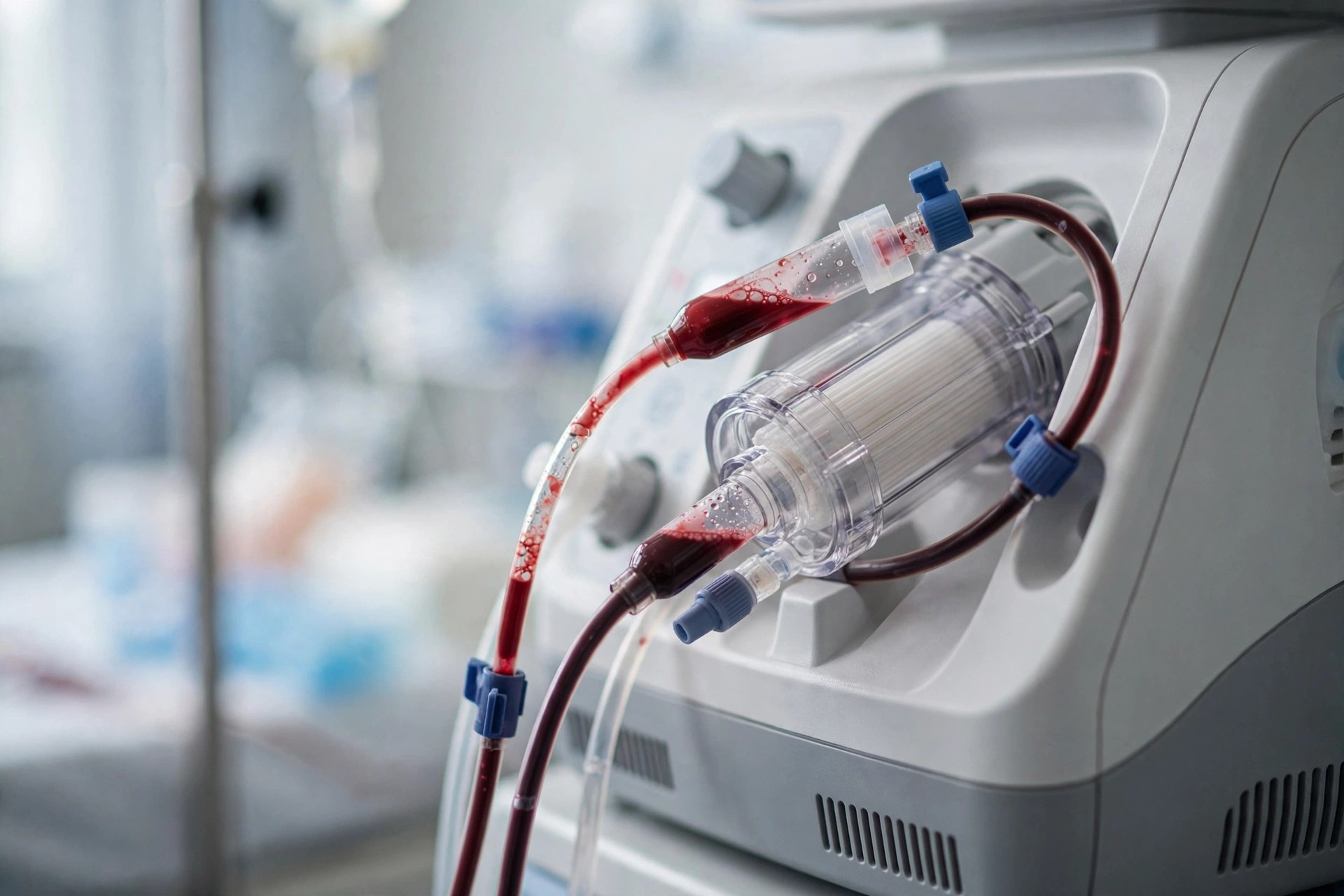
What Happens During a Hemodialysis Session?
A typical hemodialysis session at a dialysis centre in Howrah follows these steps:
- Health check: Weight, blood pressure, and temperature are recorded. Weight gain since the last session tells the team how much fluid needs to be removed.
- Access preparation: The AV fistula or catheter site is cleaned carefully to prevent infection.
- Needle insertion: Two needles are placed in the fistula, one to draw blood out and one to return it.
- Filtration: Blood flows through the dialyzer for 3 to 4 hours. Most patients rest, read, or sleep during this time.
- Monitoring: Nurses track blood pressure and watch for cramps, dizziness, or drops in pressure throughout the session.
- Wrap-up: Needles are removed, the site is bandaged, and post-dialysis weight and blood pressure are recorded.

How Often Is Dialysis Needed?
Most hemodialysis patients need 3 sessions per week, each lasting about 4 hours. Some patients may start with 2 sessions per week depending on their remaining kidney function. The exact schedule is set by the nephrologist and reviewed regularly through blood tests.
Missing sessions is risky. Skipping dialysis can cause dangerous fluid buildup, high potassium, and severe breathlessness. Always inform your centre in advance if you cannot attend a session.
Dialysis Cost in Howrah
The dialysis cost in Howrah varies by centre, session type, and consumables used. As a general indication, a single hemodialysis session at a private hospital in the Howrah-Kolkata region typically ranges from Rs. 1,500 to Rs. 3,500. Monthly costs depend on the number of sessions per week and any additional medicines or injections like erythropoietin.
Many patients are covered under government schemes or health insurance for chronic kidney disease treatment. Contact Lords Health Care for current dialysis session charges and assistance with cashless insurance or scheme paperwork.
Diet and Care Between Dialysis Sessions
What you eat and drink between sessions directly affects how you feel:
- Limit fluids: Too much fluid between sessions causes swelling and breathlessness. Your doctor will set a daily fluid limit.
- Control potassium: Avoid excess bananas, oranges, potatoes, and coconut water unless your doctor allows them.
- Limit salt: Less salt means less thirst and better blood pressure control.
- Protein matters: Dialysis removes protein, so adequate protein intake (eggs, fish, dal as advised) is important.
- Take medicines on time: Phosphate binders, blood pressure medicines, and iron supplements work best on schedule.
- Protect your fistula: Do not lift heavy weights with the fistula arm, avoid blood pressure checks or blood draws on that arm, and check the vibration (thrill) daily.
Our dietitian can prepare a personalised renal diet chart based on your reports.
Why Choose Lords Health Care for Dialysis in Shibpur?
- Experienced nephrology team with dedicated dialysis nursing staff
- Modern hemodialysis machines with strict infection-control protocols
- In-house 24-hour diagnostic centre for kidney function tests and monitoring
- Diabetes care under the same roof, since diabetes is a leading cause of kidney failure
- Easy to reach at Shibpur, near Nabanna, Howrah, with 24/7 emergency support
- Help with insurance, cashless claims, and government scheme documentation
Frequently Asked Questions
Is dialysis painful?
The needle insertion may cause brief discomfort, similar to a blood test. Most patients feel comfortable during the 3 to 4 hour session and rest or sleep through it.
How long can a person live on dialysis?
Many patients live for years on regular dialysis with a good quality of life, provided they attend all sessions, follow the diet, and take medicines as prescribed.
Can I travel while on dialysis?
Yes, with planning. Your nephrologist can arrange dialysis at a centre near your destination. Carry your reports, fistula care instructions, and medicines.
What should I eat before a dialysis session?
Eat a light, familiar meal unless your doctor advises otherwise. Avoid very salty or potassium-rich foods on dialysis days, and follow your fluid limit.
Where can I get dialysis in Shibpur near Nabanna?
Lords Health Care at 13/3, Circular 2nd Bye Lane, Kona Expressway, Shibpur, Howrah offers supervised hemodialysis sessions with nephrology support. Call +91 82729 04444 to book a consultation.
Book a nephrology consultation today
Lords Health Care
13/3, Circular 2nd Bye Lane, Kona Expressway, Shibpur, Howrah – 711102 (Near Nabanna)
Call: +91 82729 04444 | Toll-Free: 18003090895
www.lordshealthcare.org
Related Articles
View all →
Dialysis Centre Near Me in Howrah: How to Choose the Right Kidney Care Centre